Acting as the Mentor (Meeting the Mentor)
This stage is about steadying, not moving.
Your audience already recognises the friction.
They’re not resistant.
They’re uncertain.
Stage 3 is where your content quietly answers the question:
“Am I safe to keep going?”
You are not here to push action.
You are here to remove doubt.
If Stage 2 named the problem,
Stage 3 changes how it feels to sit with it.
When to Use This Stage
Apply Stage 3 when:
People say “This makes sense, but…”
The same questions repeat across conversations
Hesitation sounds cautious, not defensive
If your audience feels overwhelmed, rushed, or pressured,
you are not in the mentor role yet.
Before You Apply This Stage
You are not fixing the problem. You are reframing it.
You are not teaching a system. You are reducing uncertainty.
If your content starts to feel like:
instructions
motivation
performance
you’ve gone too far.
The mentor does not accelerate the hero. They steady them first.
The Five Mentor Expressions
These elements work together, but each has a distinct purpose. You don’t need all five every time.

01. Credibility
Goal: Signal “I’ve walked this terrain before.”
Your audience needs credibility that you can guide them. But shouting about achievements can push them away. Sharing credibility is about showing, not boasting.
This is not proof. It’s familiarity.
Short, grounded signals work best.
Example:
“Most of the founders I work with hit this point after client work expands.”
If it sounds impressive, reduce it.
If it sounds reassuring, you’re close.
Bad vs Good Example
❌ Bad (Proof disguised as credibility):
“We doubled a client’s revenue in 3 months. Look at these exact numbers.”✅ Good (Credibility):
“Last year, a client cut their admin time in half after applying our process.”
(Short, relevant, believable, but not the whole “after” picture yet.)

02. Empathy
Goal: Make the hesitation feel reasonable, not personal.
People don’t care what you know until they feel you understand their struggle. Empathy bridges the gap between authority and connection.
You are not rescuing.
You are normalising.
Example:
“This usually shows up when energy is already gone, not because people don’t care.”
Avoid “you should”.
Avoid comparison.
Name the feeling accurately and move on.
Bad vs Good Example
❌ Bad: “You should have started earlier.”
✅ Good: “I understand how overwhelming it feels to juggle marketing on top of everything else. I’ve been there too, and here’s what helped me move forward.”

03. Reframe
Goal: Change how the problem is understood.
Complexity overwhelms people. If the path looks too hard, your audience won’t take it. Reframing the journey makes change feel achievable.
This is the core of Stage 3.
Good reframes sound like:
“This isn’t a motivation issue.”
“This isn’t about discipline.”
“This feels hard because of timing, not capability.”
If the reframe removes shame, it’s working.
Bad vs Good Example
❌ Bad: “Just overhaul your entire marketing strategy.”
✅ Good: “Start with three steps: clarify your hero, share one story, and repurpose it into two platforms.”
INSIGHT
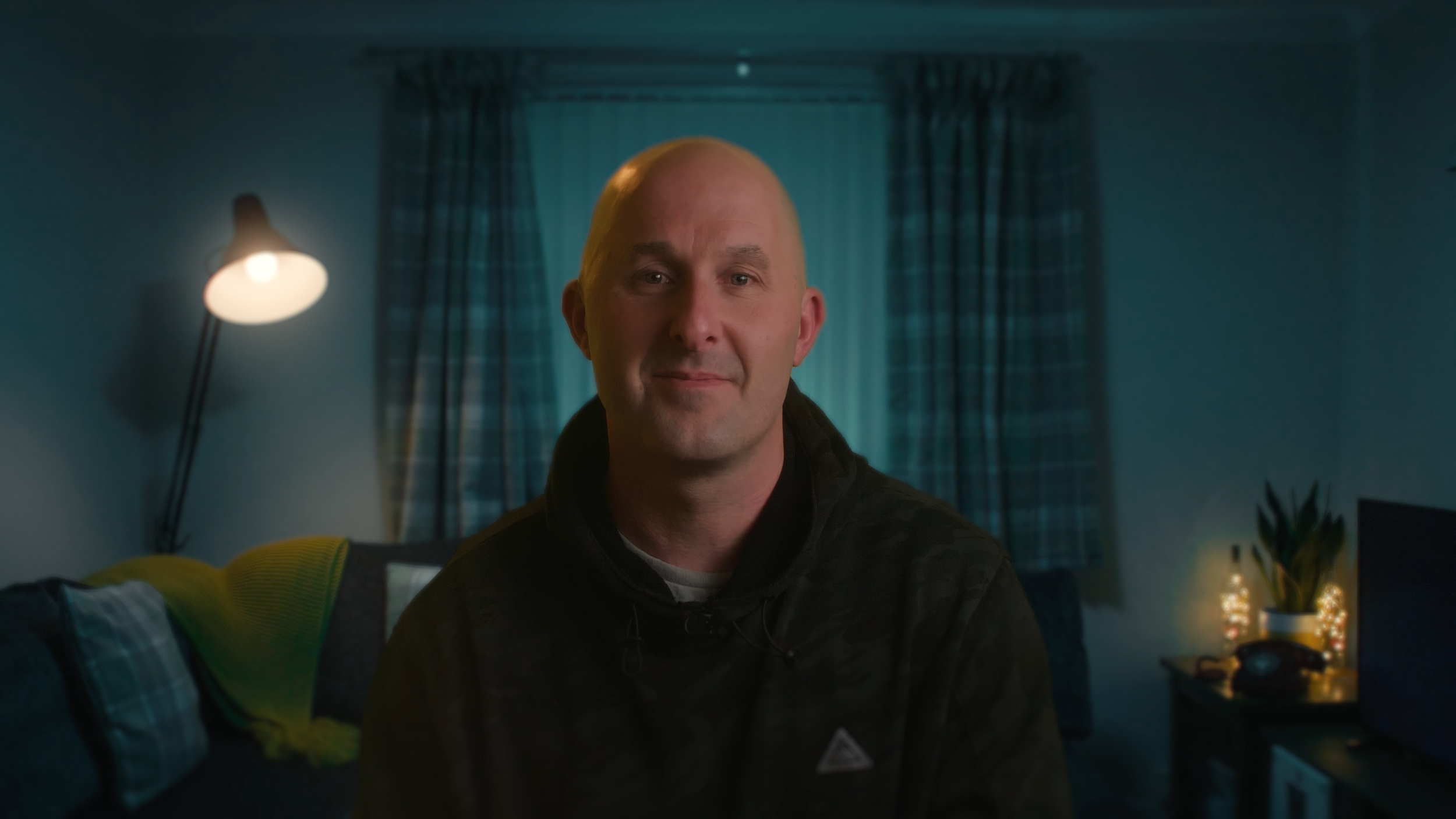
Finding My Mentor Through Content
When I was setting up Datrysiad Media, I never had an in-person mentor guiding me through the process, perhaps people of inspiration. However, there wasn’t someone I could call who had already built a media production company and could guide me what to do next.
But that doesn’t mean I was without mentors. My mentors showed up through content.
One of the biggest influences on my thinking has been Chris Do from The Futur. The way he articulates messages, the way he frames business through the lens of customer importance, and the clarity with which he explains why communication matters, all of it shaped how I moved forward.
Chris doesn’t know me. He isn’t consciously mentoring me. But his content became my mentorship. His words helped me reframe my business decisions, think differently about customers, and step forward with confidence.
👉 That’s the power of content. Sometimes, your content is the mentor. Even if you never meet the people it reaches, your guidance can shape their journey in ways you’ll never fully see.

04. Reduce Risk
Goal: Make progress feel safer than standing still.
Objections and fears are the invisible walls holding your hero back. Addressing them upfront builds confidence and trust. If you ignore them, your content risks sounding unrealistic or detached from your hero’s reality.
You are not outlining a plan.
You are lowering the perceived cost of the next step.
Example:
“You don’t need to decide anything yet. Just notice this once.”
If it feels instructional, simplify again.
Bad vs Good Example
❌ Bad: “Don’t worry about it, just start.”
✅ Good: “Many people worry about wasting time on content that doesn’t work. That’s why I suggest testing one story format on LinkedIn for two weeks, you’ll know quickly if it resonates.”
How to Find Your Audience’s Common Fears & Objections
💬 Listen to Conversations
Capture questions raised in sales calls, discovery calls, or networking chats.
Look for hesitation phrases like: “I’m not sure I have time…” or “Does this really work for people like me?”
📋 Review Past Interactions
Revisit client onboarding notes, proposals, or feedback emails.
Pay attention to where prospects slowed down or pushed back.
🌍 Social Listening
Check LinkedIn, Facebook groups, Reddit, or industry forums.
Read comments on competitor posts, the questions and doubts there often mirror your audience’s.
📣 Ask Directly
Run a poll, survey, or post: “What’s the biggest hesitation you have about [topic]?”
The responses can hand you content ideas word-for-word.
👂 Borrow From the Market
Read competitor testimonials or case studies.
Look for lines like: “At first, I was worried about X, but now…” - that “X” is an objection your audience shares.
🧠 Empathy Mapping
Step into your hero’s shoes.
Ask: What are they thinking? What are they feeling? What’s stopping them from acting?

05. Gentle Nudge
Goal: Invite confidence, not commitment.
Starting is the hardest part. People don’t need more theory, they need encouragement to take that first step and proof that progress is possible.
This is not a call to action.
It’s a permission slip.
Examples:
“This is usually where people pause.”
“If this sounds familiar, you’re not behind.”
“This is a normal place to be.”
If it sounds like encouragement, soften it.
Bad vs Good Example
❌ Bad: “Just commit to a year-long programme.”
✅ Good: “Sometimes the only useful step is noticing one client struggle you hear repeatedly.”

What a Stage 3 Post Looks Like
Most people don’t avoid content because they lack ideas.
They avoid it because it shows up when their energy is already spent.That’s not a discipline issue.
It’s a timing one.This is the point where people usually assume they’re the problem.
They’re not.
If this feels familiar, pause here.
Nothing needs fixing yet.
Minimum Viable Content (MVC)
MVC for Stage 3 = Empathy + Reframe
That’s enough to build trust.
Example:
“This feels hard because of when it’s happening, not because you’re bad at it.”
If someone feels calmer after reading, the mentor role is working.
Purpose Check
Before sharing, ask:
Does this reduce pressure?
Does it make the situation feel more navigable?
Does it leave the hero feeling more capable than before?
If yes, publish.
If not, simplify again.

What’s Next?
If this builds trust but no movement → Stay here
If small actions start appearing → Stage 4 (Crossing the Threshold)
If results are visible → Stage 5 (Transformation)
Stage 3 is not about progress.
It’s about permission to continue.
When doubt softens, movement follows naturally.