Be the Guide, Not the Hero - Meeting the Mentor
Every hero needs a guide. In stories, it’s the mentor who shows the way forward. In business, that guide is you. But here’s the key: your role is not to take the spotlight, it’s to make the hero (your customer) feel capable, supported, and confident enough to keep going.

I UNDERSTAND YOU
Stage 3 is where your purpose really shows up. You’re not creating content to prove yourself, you’re creating it to support your audience on their journey. When you step into the guide role, every post, video, or email should quietly ask: “Does this help my hero take a step forward?” That’s how your purpose translates into action.
By the end of this stage, you’ll be able to:
Share your credibility without making it all about you.
Show empathy that feels real and human.
Break down the journey into simple, doable steps.
Address fears and objections with honesty.
Encourage small actions that build momentum.
Outcome: You’ll leave Stage 3 with a framework for positioning yourself as the trusted guide, not the hero, so your audience feels safe choosing you to help them take the next step.

KNIVES OUT
Meet the Mentor in action:
🎬 Knives Out
In Knives Out, Marta is overwhelmed by the chaos of the investigation, feeling trapped between suspicion and loyalty. Then enters Detective Benoit Blanc. He doesn’t solve everything for her, but he reframes her view of the situation. He listens, observes, and provides calm, guiding insights that help Marta find her way through the confusion. Blanc never takes her place in the story, he positions her to succeed.
💼 Business parallel
This is exactly what you must do for your audience. Like Marta, your hero already has the potential, but they’re stuck in noise and doubt. Your role is to be their Benoit Blanc: empathetic, calm, and insightful. Instead of overwhelming them with credentials or overcomplicated answers, you simplify the path and remind them they’re capable. You don’t steal their spotlight, you make sure they feel like the story still belongs to them.
BEFORE YOU BEGIN
Worried you don’t have credibility? You don’t need a decade of experience. Even one clear result or story from a past client is enough. And remember: go back to Stage 1 - who is your hero? Frame your credibility and empathy in their world. When your examples reflect their real struggles, they’ll know you’re the right guide for them.
Keep it human: Your job here isn’t to brag, but to show “I’ve walked this path before and I can help you too.”
Empathy counts more than expertise: People care more about whether you understand their struggle than about your CV.
Don’t over-complicate the steps: Three simple stages is enough. If you write 10, you’ll lose them.
💡 Tip: Imagine you’re explaining it to a beginner over coffee. If they’d nod along, you’re on the right track.

The framework is important, and we use it as our guiding compass too. Our hero’s top pain is the following:
Pain: Time drain of content creation
“By the time I’ve finished client calls and chased invoices, the last thing I want to do is sit there staring at a blank screen wondering what to post.”
➝ This is the single biggest blocker: My hero feels they literally doesn’t have the hours to do it.

01. Share Credibility
Why This Matters
Your audience needs credibility that you can guide them. But shouting about achievements can push them away. Sharing credibility is about showing, not boasting.
⚖️ Credibility vs Proof - What’s the Difference?
Credibility is believability in the moment. It’s the reassurance that “you’re worth listening to.” It’s built with short stories, data points, or behind-the-scenes insights that show you know the terrain.
Proof (Stage 5: Transformation) is irrefutable evidence of results. It’s the “after picture” - measurable, undeniable change that validates the journey was worth it.
👉 Think of it like this:
Credibility = the guide showing you have walked the path before.
Proof = showing the destination exists because others have already reached it.
When you share credibility in Stage 3, you’re saying: “I can walk beside you.”
When you share proof in Stage 5, you’re saying: “Here’s what happens when you keep going.”
Credibility Steps
Share relevant experience or results.
Use short client quotes or examples.
Show a behind-the-scenes look at your process.
Reference known industry facts or trends.
Keep it humble, focus on them, not you.
Bad vs Good Example
❌ Bad (Proof disguised as credibility):
“We doubled a client’s revenue in 3 months. Look at these exact numbers.”✅ Good (Credibility):
“Last year, a client cut their admin time in half after applying our process.”
(Short, relevant, believable, but not the whole “after” picture yet.)
Breaking down our pain : Time drain of content creation
“By the time I’ve finished client calls and chased invoices, the last thing I want to do is sit there staring at a blank screen wondering what to post.”
Applied Examples (related to the pain)
Share a short client win:
“Tom cut his weekly content time in half by repurposing one workshop exercise instead of starting from scratch.”Use industry data:
“Studies show decision fatigue peaks at the end of the day, no wonder posting feels impossible after hours of client calls. That’s why simple frameworks matter.”Show behind-the-scenes:
“Here’s my quick note system, I jot down client questions during the day so I’m never stuck looking at a blank screen at night.”Reference industry trends:
“More consultants are moving to short-form video tips because they can record in minutes, without losing evenings to writing.”
Template (Fill-in-the-blanks)
“We helped ______ achieve ______, and you can too.”
“Industry data shows ______, which is why we recommend ______.”
“Here’s a quick look at how we ______ to ensure ______.”
Example Template
“We helped a coaching business reduce cancellations by 40%, and you can apply the same system.”

02. Show Empathy
Why This Matters
People don’t care what you know until they feel you understand their struggle. Empathy bridges the gap between authority and connection.
Steps
Acknowledge their struggle without belittling it.
Share a time you faced something similar.
Avoid “should have” language.
Use “I understand” over “I know.”
End with encouragement.
Bad vs Good Example
❌ Bad: “You should have started earlier.”
✅ Good: “I understand how overwhelming it feels to juggle marketing on top of everything else. I’ve been there too, and here’s what helped me move forward.”
Breaking down our pain : Time drain of content creation
“By the time I’ve finished client calls and chased invoices, the last thing I want to do is sit there staring at a blank screen wondering what to post.”
Applied Examples (Show Empathy for the pain)
Acknowledge their struggle:
“After a full day of calls and chasing invoices, staring at a blank screen feels impossible, and you’re not alone in that.”Share a time you faced something similar:
“I’ve been there too. I used to open my laptop at 9pm, knowing I ‘should post,’ but with nothing left in the tank.”Avoid blame, give reassurance:
“It’s not laziness, it’s mental overload. After serving clients all day, no one has endless creative energy.”End with encouragement:
“If this sounds like you, take heart, even tiny shifts (like noting one client question during the day) can replace that nightly blank-screen dread.”
Template (Fill-in-the-blanks)
“I understand how it feels to ______.”
“I’ve been through ______ too, and I know how hard it can be.”
“You’re not alone if you’ve struggled with ______.”
Example Template
“I understand how it feels to post for weeks and get almost no engagement.”

03. Simplify the Journey
Why This Matters
Complexity overwhelms people. If the path looks too hard, your audience won’t take it. Simplifying the journey makes change feel achievable.
Steps
Break the solution into 3-5 steps.
Remove anything unnecessary.
Use visual aids (diagrams, lists).
Give examples at each step.
Test it with a beginner to see if it’s clear.
Bad vs Good Example
❌ Bad: “Just overhaul your entire marketing strategy.”
✅ Good: “Start with three steps: clarify your hero, share one story, and repurpose it into two platforms.”
Breaking down our pain : Time drain of content creation
“By the time I’ve finished client calls and chased invoices, the last thing I want to do is sit there staring at a blank screen wondering what to post.”
Applied Examples (Simplify the Journey for the pain)
Break into simple steps:
“Instead of forcing yourself to ‘write a post’ at night, try this:
1️⃣ Jot down one client question during the day.
2️⃣ Turn it into a quick note in your phone.
3️⃣ Expand it into a short post later. That’s it.”Remove unnecessary fluff:
“You don’t need a 1,000-word blog every time. One short answer to a client question is enough.”Use a visual (list or template):
“Think of it like this: Question → Note → Post. That’s your 3-step loop.”Beginner-friendly example:
“Yesterday a client asked me how to save time with invoicing. I wrote it in my notes app at 2pm. At 8pm, instead of staring at a blank screen, I just expanded that note into a 3-line post.”
Template (Fill-in-the-blanks)
“Here’s a 3-step path: ______, ______, ______.”
“Start with ______, then move to ______, and finish with ______.”
“To make this simple, just do ______ today.”
Example Template
“Here’s a 3-step path: Define your hero, write one tip, and share it in video form.”
INSIGHT
Finding My Mentor Through Content
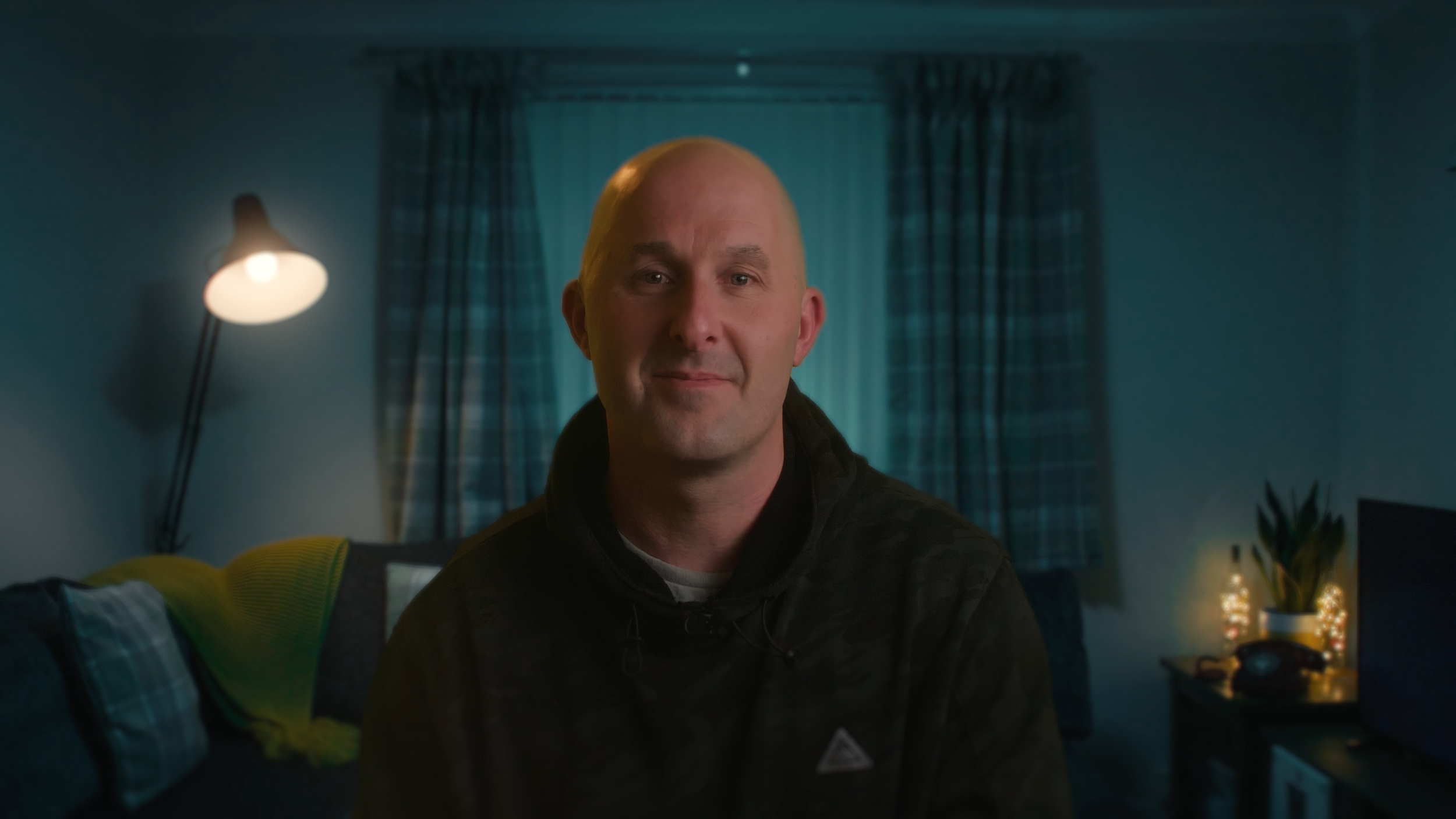
When I was setting up Datrysiad Media, I never had an in-person mentor guiding me through the process, perhaps people of inspiration. However, there wasn’t someone I could call who had already built a media production company and could guide me what to do next.
But that doesn’t mean I was without mentors. My mentors showed up through content.
One of the biggest influences on my thinking has been Chris Do from The Futur. The way he articulates messages, the way he frames business through the lens of customer importance, and the clarity with which he explains why communication matters, all of it shaped how I moved forward.
Chris doesn’t know me. He isn’t consciously mentoring me. But his content became my mentorship. His words helped me reframe my business decisions, think differently about customers, and step forward with confidence.
👉 That’s the power of content. Sometimes, your content is the mentor. Even if you never meet the people it reaches, your guidance can shape their journey in ways you’ll never fully see.

04. Remove Obstacles
Why This Matters
Objections and fears are the invisible walls holding your hero back. Addressing them upfront builds confidence and trust. If you ignore them, your content risks sounding unrealistic or detached from your hero’s reality.
Steps
List common fears or objections.
Give honest answers to each.
Share real stories of people who overcame them.
Offer a low-risk first step.
Remind them of the payoff.
Bad vs Good Example
❌ Bad: “Don’t worry about it, just start.”
✅ Good: “Many people worry about wasting time on content that doesn’t work. That’s why I suggest testing one story format on LinkedIn for two weeks — you’ll know quickly if it resonates.”
How to Find Your Audience’s Common Fears & Objections
💬 Listen to Conversations
Capture questions raised in sales calls, discovery calls, or networking chats.
Look for hesitation phrases like: “I’m not sure I have time…” or “Does this really work for people like me?”
📋 Review Past Interactions
Revisit client onboarding notes, proposals, or feedback emails.
Pay attention to where prospects slowed down or pushed back.
🌍 Social Listening
Check LinkedIn, Facebook groups, Reddit, or industry forums.
Read comments on competitor posts, the questions and doubts there often mirror your audience’s.
📣 Ask Directly
Run a poll, survey, or post: “What’s the biggest hesitation you have about [topic]?”
The responses can hand you content ideas word-for-word.
👂 Borrow From the Market
Read competitor testimonials or case studies.
Look for lines like: “At first, I was worried about X, but now…” - that “X” is an objection your audience shares.
🧠 Empathy Mapping
Step into your hero’s shoes.
Ask: What are they thinking? What are they feeling? What’s stopping them from acting?
Breaking down our pain : Time drain of content creation
“By the time I’ve finished client calls and chased invoices, the last thing I want to do is sit there staring at a blank screen wondering what to post.”
Applied Examples (Remove Obstacles for the pain)
Common fear: “I don’t have the time.”
“Here’s the truth: you don’t need an extra hour. Start by capturing one client question during the day, it takes 30 seconds. That’s your content seed.”Common fear: “What if it isn’t good enough?”
“Your posts don’t need to be polished essays. In fact, the most engaging ones often sound conversational and imperfect. Audiences connect with honesty.”Real story:
“Tom’s first post was three lines long and written on his phone between meetings. It wasn’t perfect, but it sparked a client conversation that led to his first online booking.”Low-risk first step:
“Instead of writing a full post, try drafting just one line tonight: ‘Today a client asked me X.’ That’s enough to get moving.”Remind them of the payoff:
“Each small post adds up. Within weeks, you’ll stop staring at blank screens and start seeing replies, leads, and confidence grow.”
Template (Fill-in-the-blanks)
“You might be worried about ______. That’s normal. Here’s how to handle it.”
“One of our clients felt the same way, but ______ helped them get past it.”
“Try this simple step: ______.”
Example Template
“You might be worried about not looking polished. That’s normal. Just start with a 30-second clip on your phone.”

05. Encourage Action
Why This Matters
Starting is the hardest part. People don’t need more theory, they need encouragement to take that first step and proof that progress is possible.
Steps
Acknowledge that starting is the hardest part.
Give a micro-action they can do in 5 minutes.
Show how small wins build momentum.
Reinforce their ability to do it.
Celebrate even tiny progress publicly.
Bad vs Good Example
❌ Bad: “Just commit to a year-long programme.”
✅ Good: “Take five minutes to write down one client struggle you hear all the time. That’s the seed of your next post.”
Breaking down our pain : Time drain of content creation
“By the time I’ve finished client calls and chased invoices, the last thing I want to do is sit there staring at a blank screen wondering what to post.”
Applied Examples (Encourage Action for the pain)
Acknowledge the struggle
“Starting feels like the hardest part, especially after a long day of client calls and admin.”Give a micro-action (5 mins or less)
“Open your notes app and write down one client question you heard today. That’s it. Don’t polish, don’t edit, just capture it.”Show small wins build momentum
“Most of my clients are surprised that a single sentence like this can spark a full post later. One captured thought is better than a blank screen.”Reinforce their ability
“If you’ve answered a client’s question once, you can do it again for your audience. You already have the knowledge, it’s just about sharing it.”Celebrate tiny progress
“Even posting one short thought today means you’re ahead of yesterday. That’s a win worth celebrating.”
Template (Fill-in-the-blanks)
“You don’t need to ______ today. Just start with ______.”
“Even ______ is a win worth celebrating.”
“If you’ve done ______, you’re already ahead.”
Example Template
“You don’t need to film a full video today. Just write your first headline idea.”

Reflection & Action
MANDATORY - DO NOT SKIP THIS!!!
You now have the five parts of being “The Guide, Not the Hero.” To create a piece of content from this stage:
Share Credibility - provide proof you can help without bragging.
Show Empathy - acknowledge your audience’s struggle and connect with it.
Simplify the Journey - break the solution into 3-5 simple steps.
Remove Obstacles - name their fears and give practical reassurance.
Encourage Action - give them a small, doable first step.
💡 Check back to your foundations before you publish:
Does this piece of content still connect to your Purpose (Stage 0)? → Am I creating this to help, not to show off?
Does it centre on the Hero (Stage 1)? → Am I making my customer the star of this story, not me?
By combining these five elements into one LinkedIn post, video script, or email, you’ll create a self-contained piece of content that positions you as the trusted ally, the guide who makes the hero (your customer) believe they can succeed.
Example LinkedIn Post:
I used to believe the hardest part of content was finding ideas.
But after working with dozens of founders, I realised the real struggle isn’t ideas, it’s confidence.
It feels like everyone else is more polished, more consistent, more strategic. And when you’re juggling clients and delivery, posting online feels like a luxury you can’t afford.
Here’s the truth: you don’t need to overhaul your entire content strategy overnight.
Try this instead:
1️⃣ Pick one client win from the last month.
2️⃣ Write down the exact words they used to describe the difference it made.
3️⃣ Share that one story in a short post.That’s it. That’s your content.
Worried it won’t be good enough? Here’s the secret: your audience cares more about honesty than polish. A simple, true story will resonate more than any “perfect” campaign.
If you’ve been holding back, start small. Post one story. See how it feels.
👉 The first step isn’t about being brilliant. It’s about being present.
Example Post Breakdown (How the 5 sections fit)
Share Credibility
“After working with dozens of founders…”
→ Establishes experience without bragging.Show Empathy
“It feels like everyone else is more polished, more consistent, more strategic. And when you’re juggling clients and delivery, posting online feels like a luxury you can’t afford.”
→ Names the fear directly, making the reader feel seen.Simplify the Journey
“Try this instead: 1️⃣ Pick one client win… 2️⃣ Write down the exact words… 3️⃣ Share that one story in a short post.”
→ Strips away overwhelm into three doable steps.Remove Obstacles
“Worried it won’t be good enough? Here’s the secret: your audience cares more about honesty than polish.”
→ Directly tackles the fear of not being polished enough.Encourage Action
“If you’ve been holding back, start small. Post one story. See how it feels. 👉 The first step isn’t about being brilliant. It’s about being present.”
→ Low-risk, encouraging nudge to act now.
Minimum Viable Content (MVC) Help
Full Framework (5 parts) = Share Credibility + Show Empathy + Simplify the Journey + Remove Obstacles + Encourage Action
Minimum Viable Content (MVC)
Just do Empathy + One Step.
Show you understand their struggle, then give one small, doable action.
👉 Example MVC Post:
“I know how overwhelming it feels to stare at a blank screen, knowing you should post but not knowing what to say. Try this: write down one client struggle you’ve heard this week and share it as a post. That’s enough to start.”
Purpose Check 🔎
Before you move on, pause and ask:
Does this piece of content connect to the purpose I defined in Stage 0 and align with my hero in stage 1?
If not, how can I adjust it so it does?
👉 Quick Rule: If it doesn’t serve your purpose, it won’t serve your audience.
CASE STUDY: SARAH “THE GUIDE”
Sarah (our consultant from before) has already defined her Purpose (help overworked trainers move online) and Hero (Tom, the leadership trainer stuck in the in-person cycle). She’s posted her first Call to Adventure (Stage 2). Now she needs to deepen trust and position herself as the guide, not the hero.
Example Post (Be the Guide)
When I first met Tom, a leadership trainer, he was working 60-hour weeks delivering workshops in person. He loved teaching but felt trapped. His words were: “If I stop travelling, I stop earning.”
I know that pressure, I’ve lived it too. For years, I built everything around being in the room. It’s exhausting, and it leaves no space to grow.
Here’s the truth: moving online doesn’t mean losing quality. It means creating space.
If you’re in the same boat as Tom, here’s a simple way to start:
1️⃣ Take one of your favourite workshop exercises.
2️⃣ Record yourself explaining it in under 3 minutes.
3️⃣ Share it with your network and invite feedback.That’s it, no production team, no big launch. Just one step to prove your expertise translates online.
Tom’s first clip wasn’t perfect. But it sparked a conversation with a client who said: “I didn’t know you could offer this virtually.” That one conversation turned into his first online booking.
If you’ve been putting it off, this is your sign. Start with one exercise. Post it. Test it. See what happens.
Why This Works
Credibility: Sarah shows she understands Tom’s reality because she’s lived it.
Empathy: She reflects Tom’s own words back to him (“If I stop travelling, I stop earning”).
Simplification: 3 clear steps to test moving online.
Remove Obstacles: Reassures no big launch or production team is needed.
Encourage Action: Frames it as “just one exercise” - achievable and low risk.
✅ Sarah positions herself as Tom’s guide, not the hero. By sharing his challenge and showing a simple first step, she makes change feel possible.

Be the Guide, Not the Hero — AI Prompt Generator
Paste your draft post below. Click “Generate Prompt” to create a ready-to-copy AI prompt that reviews your post against Stage 3 (Meeting the Mentor).

What’s Next?
Stage 3 is where you step in as the guide. You’re not the hero; your role is to provide clarity, confidence, and encouragement.
Here’s how to decide what to do next for your audience:
If they’re curious but hesitant → Stage 2. (Call To Adventure)
If they’re testing first steps → Stage 4. (Crossing The Threshold)
If they need proof → Stage 5. (Transformation)
OR stick with this stage and maximise your efforts:
👉 Multiply it: A single 3-step framework can become a diagram, a short video, and a blog post. A story of empathy can fuel a video clip and an email opener.
👉 Sustain it: Collect questions. Every “But what about…?” belongs somewhere. A tool question fits Stage 3. A success-proof request fits Stage 5.
Stage 3 deepens trust. By simplifying the path and showing you understand, you make the journey feel safe enough to continue.